



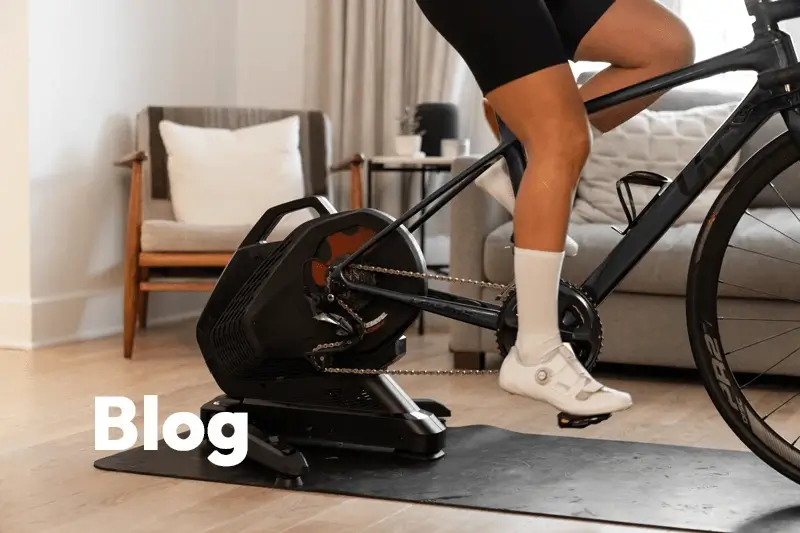





The geometry of a bicycle is a combination of key measurements that describe the general shape and size of a bicycle. Though there are some measures that are more or less useful depending on the type of bicycle, there is a generally consistent set of measurements that can be found in the geometry chart of most bicycle manufacturers and are often referred to when discussing both the fit and handling of bicycles.
As each measurement has a different impact for the rider, we’ve separated the key measurements into two main categories
- Handling Geometry
- Fit Geometry
Bike Handling Geometry
These aspects of a bicycle primarily impact how a bike will handle (e.g. steering, stability, etc.).
Bike Fit Geometry
These aspects of a bicycle primarily impact how the bicycle will fit the rider and are the main contributors to determine the right bike size for a rider.
In this post we’ll be focusing on the 7 key measurements involved in handling geometry, if you would like to learn more about Fit Geometry we have a separate article going over those measurements that we linked to here!
Head Tube Angle
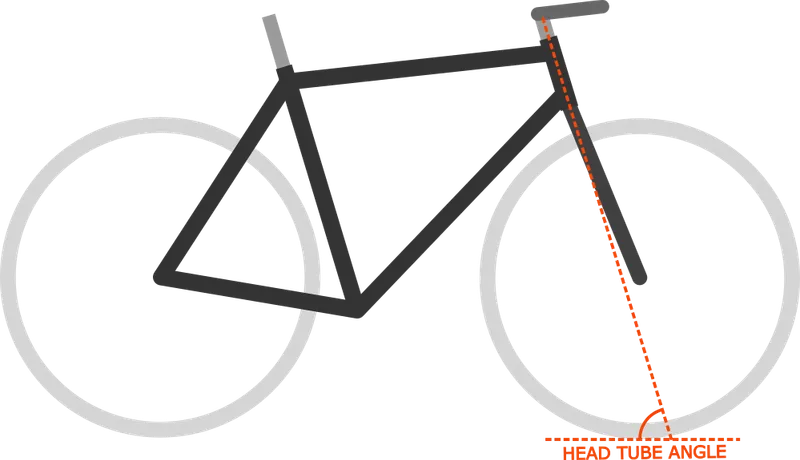
head tube angle measurement
Head tube angle is the angle of the head tube (projected) in relation to the ground.
Impact: Head tube angle has a significant role in determining how a bike steers and handles. In general, a slacker (lower) head tube angle is associated with better stability at higher speeds but can be floppy at slower speeds, while a steeper (higher) angle is associated with a more nimble handling bike which can feel twitchier at high speeds.
Trail
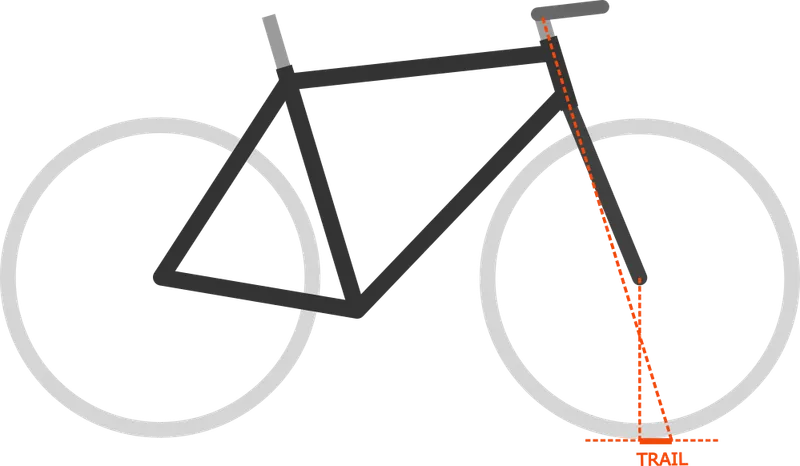
trail measurement
Trail is the horizontal measurement of how far behind the steering axis (projection of head tube) the front tire makes contact with the ground.
Impact: More trail generally equates to a (relatively) faster steering bike, while less trail generally results in a slower steering bike.

Front Centre
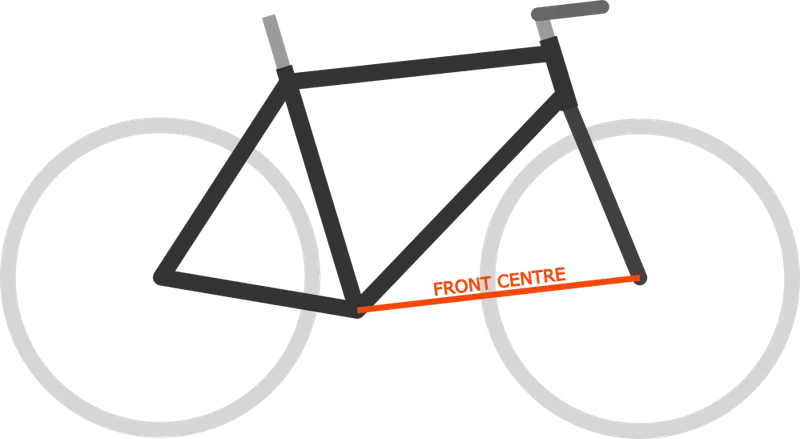
front centre measurement
Front centre is the distance between the centre of the bottom bracket and the front axle.
Impact: Front centre largely determines where the rider’s centre of mass is positioned between the bottom bracket and front wheel. Given a consistent rear centre (chainstay) length, a longer front centre will take more weight off the front wheel when on flat ground.
Bikes focused on handling steeper descents, with more technical terrain will often choose (relatively) longer front centres to accommodate the difference in weight distribution with the bike being pointed downhill.
Bottom Bracket Height

Bottom bracket height measurement
Bottom bracket (BB) height is the vertical distance from the centre of the bottom bracket to the ground.
Impact: Bottom bracket height is a strong determinant of ground clearance and the chance of pedal strikes, be it pedalling through rock gardens on a mountain bike or through a corner on a road bike.
Bottom Bracket Drop

Bottom bracket drop measurement
Bottom bracket (BB) drop is the vertical distance between the centre of the bottom bracket and a horizontal line drawn between the front and rear axles of the bike.
Impact: BB drop helps determine how high the rider’s overall centre of mass is relative to the axles of the bike, which has a strong influence on how a bike corners. Greater BB drop tends to result in a bike that corners better at high speeds. BB drop in bike design is always balanced with BB height to find a bike that corners as well as possible while preventing excessive pedal strikes for the style of riding the bike is intended for.
Chainstay Length
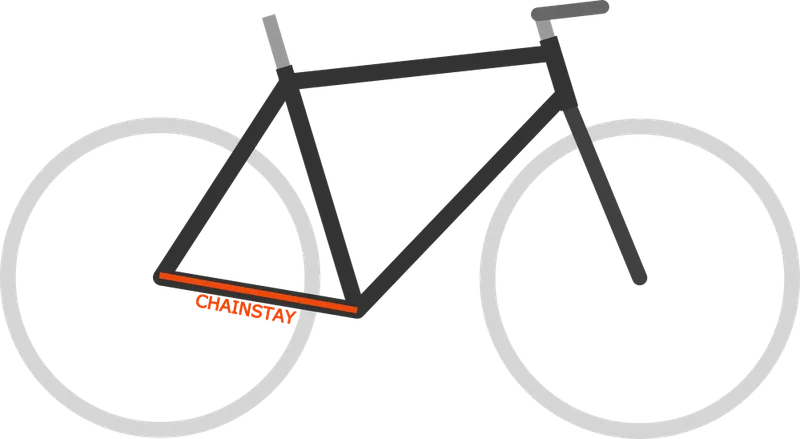
Chainstay length measurement
Chainstay length (sometimes referred to as Rear Centre) is the distance between the centre of the bottom bracket and the rear axle.
Impact: Chainstay length impacts several handling characteristics including acceleration and overall rider weight distribution. A shorter chainstay will result in faster, snappier feeling acceleration, but can also result in a bike whose front wheel lifts off the ground very easily. Longer chainstays are often associated with more stability at higher speeds.
Wheelbase
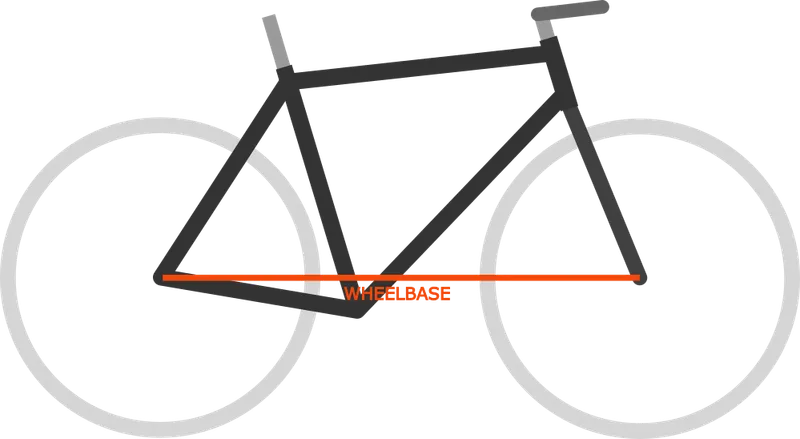
Wheelbase measurement
Wheelbase is the horizontal distance between the centre of the front and rear axles.
Impact: A longer wheelbase is more stable at higher speeds, but can also result in slow or generally unresponsive handling. A shorter wheelbase generally results in a more maneuverable bike overall, but can be less stable at higher speeds.
Additional Resources