







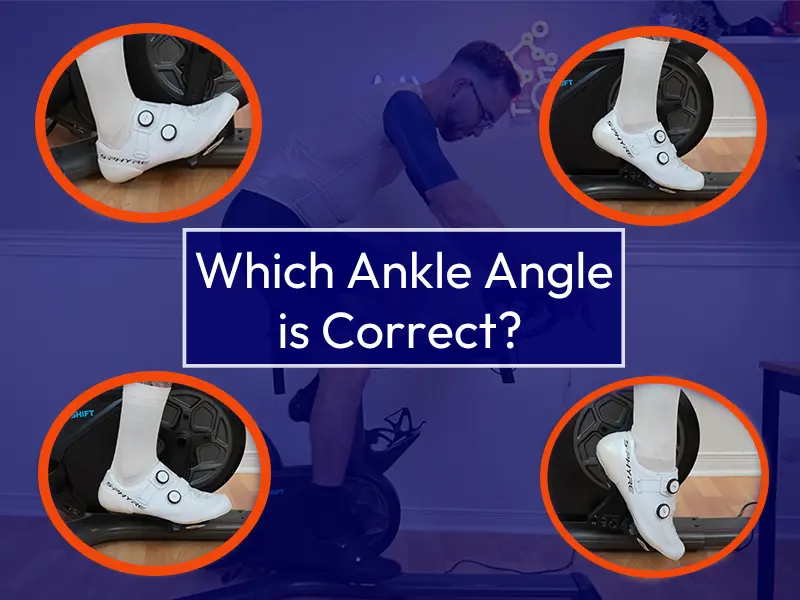
If you’ve ever been out for a ride and someone has pointed out your ankle angle or that you “ankle” too much, you are not alone. We see many cyclists fixate on ankle position, convinced there’s a single “correct” way to pedal. But here’s the reality: ankling isn’t necessarily a problem. It could be totally normal, or it could be a symptom of another issue with your fit.
Before we dive in, it’s important to define what we mean by “ankling.” There are two key elements to how your ankle behaves through the pedal stroke. The first is your ankle angle referring to the level of plantar flexion or dorsiflexion in the foot, most commonly at the bottom of the pedal stroke. The second is the degree of change throughout your pedal stroke. A high degree of change, going from very toe-down to very heel-down, would be considered a high degree of ankling. A low degree of change, the ankle angle being consistent throughout the pedal stroke, would be considered a low degree of ankling.
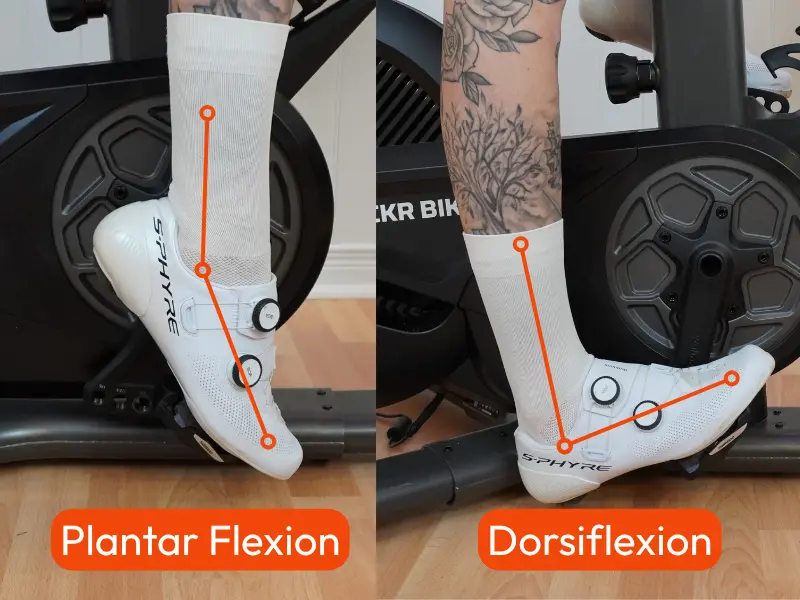
Now that we’ve defined ankling, let’s dive into some of the myths around ankling, what it may mean for your fit, and how to decipher whether you need to make changes or not.
Myth #1: There is a “Correct” Ankle Angle
One of the biggest problems we see in the discussions around ankling is riders being told they need to fix their pedal stroke to resolve their ankling. All human bodies are unique and their personal physiology deeply impacts the biomechanics of how they pedal. Some riders naturally pedal toe-down, while others are more heel-down. Look at the pro peloton—plenty of world-class riders pedal with completely different ankle angles. The takeaway? Both styles work.

There is no “correct” way to pedal. Both can be perfectly efficient and comfortable, and pedalling in a way that feels natural to you will often be what is best. There can be cases where the ankle angle is a problem, but it is usually a result of other issues with the fit (more on that later).
Myth #2: Ankling Means Something is Wrong
There is a common misconception that too much movement in the ankle (a high degree of ankling) throughout the pedal stroke is a red flag. In reality, some motion during the pedal stroke is completely normal. Your ankle is a joint that is expected to move and in fact, if your foot were locked in place, that would be a problem. A little variation in how your ankle flexes and extends is just your body working as it should.
Similar to myth #1, there is a wide range of perfectly acceptable levels of ankling. Some riders just have a high degree of ankling through the pedal stroke, while others have a lower degree. It’s not a clear sign that something is wrong and can be perfectly natural.
What Ankling Can Tell You About Your Fit
You might be thinking, “perfect, I can just disregard my ankle position now!” But unfortunately it is not that simple. Your ankle’s behaviour can tell us some things about your fit and may be a cause to consider making some adjustments.
1. Excessive reaching through the bottom of the pedal stroke
While a more “toe-down” pedal stroke can be natural for some, if you are reaching through the bottom of the pedal stroke with your toes it may be a sign that your saddle is too high. In order to determine whether it’s natural or excessive, take a look at your knee angle. If your knee is extending beyond its functional range and struggling to reach the bottom of the pedal stroke, it is common to point the toe down to compensate with the ankle. You may also notice a dropping in the hip throughout the bottom of the pedal stroke because again, the body is trying to compensate for the knee being at full extension. Take a look at your saddle height and consider lowering it to allow a natural knee and ankle angle through the pedal stroke.
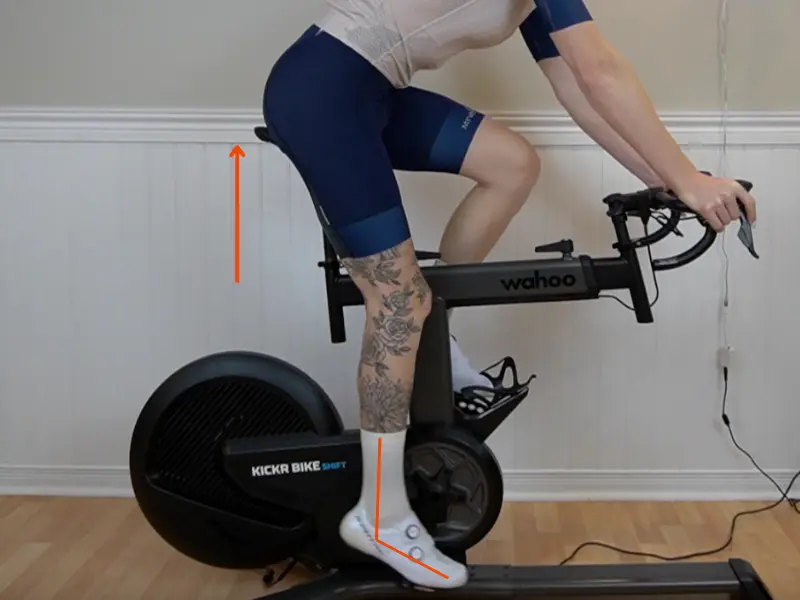
2. Protecting the knee angle
If you are someone who has been riding with their saddle too high for a very long time, it becomes second nature to pedal with that knee extension. As a result, even after lowering the saddle, we see riders subconsciously maintain the over extended knee angle they are familiar with by compensating at the ankle angle. This typically results in an exaggerated drop in the heel or a high degree of ankling.

If this applies to you, there are two approaches you can take. Try making gradual saddle height adjustments over the course of 7-10 rides (depending on how much you need to lower it) to allow your body to gradually adjust to the change. Typically, your pedal stroke will fix itself over time. The alternative is the shock approach where you lower your saddle significantly, maybe even more than required, to force yourself to break the habit. Once you have broken the knee extension habit, you can raise the saddle to the proper spot and your muscle memory will adjust to the new pedal stroke. We cover this concept in much more detail in our guide, The Seat Height Myth: Why One Formula Can’t Fit Every Rider, which breaks down how gradual versus abrupt saddle height changes affect your pedal stroke and comfort over time.
3. Cleat Position is Wrong
If you have a very high degree of plantar flexion (you’re pedalling very toe down) or have a high degree of ankling, your cleat position could be the problem. Cleats being too far forward causes instability in the foot through the pedal stroke. As a result, one of two things happens. They end up with a high degree of ankling as their ankle tries to stabilize the heel through the bottom of the pedal stroke. The alternative is they point their toe down when pedalling in an attempt to shorten the lever of the foot and create stability. The result is a loss of power and a lot of pressure through the toes.
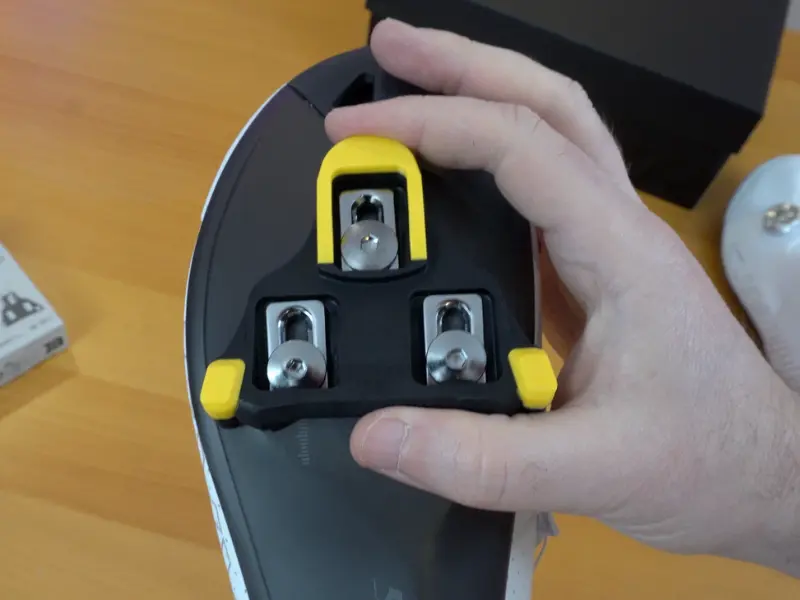
An easy solution can be moving your cleats more rearward on the shoe. We highly recommend taking a look at your cleats and making sure they’re set up properly. You can follow our step-by-step guide on How to Set Up Your Cycling Cleats for Comfort and Efficiency and watch our detailed Cleat Positioning Video Tutorial on YouTube for a visual walkthrough of the process.
4. Aggressive Riding Positions
Ever noticed how time trialists, triathletes, or even some riders in the pro peloton often look more toe-down? This is a result of them being in such an aggressive, forward position that they have rotated their body over the bottom bracket. As a result, the power phase of the pedal stroke gets shifted forward and it requires a more toe-down pedal stroke. If you are riding in aero bars, or in a more aggressive road position, this may apply to you. There isn’t actually anything wrong in this case and it is actually expected behavior!
The Bottom Line
Don’t obsess over your ankle angle. Every rider has a natural pedaling style. Some point their toes more, some less. Neither is inherently better—it’s just variation. The only concern comes when you’re at the extremes: excessively toe-down or overly heel-dropped positions and typically they are more of a sign that there may be something else with your fit that needs to be fixed. Otherwise, your ankle style is just that—your style. Some variation is normal, and your style is likely unique to you. Focus on the bigger fit picture—and let your ankles do their thing.