







One of the latest trends in the bike industry is the movement towards less aggressive bike geometries. Major brands like Specialized, BMC, and Canyon, as well as niche brands like FiftyOne and ENVE, have all recently released bikes, largely in the “All Road” category, touted as being built for “real people.” But what exactly does this “real person” geometry mean, and how does it influence fit? In this post, we are going to take a data-driven approach to explore these new bikes and how they fit the average rider.
We’ll start with a quick recap of key fit geometry metrics and how they influence your fit. Then, we’ll select a few recent bikes with “real person” geometry and visualize their fit compared to other popular bikes. Finally, we’ll discuss what a “real person” actually is, how this differs from the bike industry’s definition, and provide suggestions for industry improvements.
This post won’t delve into specific build specs like stem length, handlebar width, or crank length as it would unnecessarily complicate the analysis. However, we’ll discuss these aspects when talking about what bikes built for real people should look like.
Bike Geometry Basics
Before we jump in, let’s start with a quick recap of Stack and Reach, the most basic measurements needed to understand how a bike fits (for a deeper dive, check out our blog post Fit Geometry 101. In short, stack and reach represent the vertical and horizontal distance from the bottom bracket to the top of the head tube. While other considerations affect fit, these two metrics provide the best overall understanding of how a bike will fit and are the most relevant for comparing different models.
If you just blurted out “but what about effective top tube?”, welcome to 2024 and please read this post.

Reach and stack measurements
What is Aggressive VS. Conservative Bike Geometry?
When we talk about a bike being more aggressive, we mean it has either less stack, more reach, or both, making the front end lower, longer, or both (as related to the saddle position). Conversely, a bike that is more conservative (a.k.a. relaxed) has more stack, less reach, or both, making it higher, shorter, or both.

How aggressive or conservative a bike is can also be represented by a number called the Stack-Reach ratio, which is (you guessed it) the stack measurement divided by the reach measurement. Broadly speaking, the higher the ratio, the more conservative the geometry, the lower the ratio the more aggressive. To put things into perspective a very aggressive bike like the Canyon Aeroad has a ratio of around 1.42 (size dependant), whereas a very conservative bike like the Specialized Roubaix has ratios of around 1.55 (size dependant).
Comparing Bikes
To understand what “real person” geometry looks like, let’s compare a few of the newly released models in this space. For added context, we’ll pull from the MyVeloFit bike frame database to add the most conservative bike, the Specialized Roubaix, and the most aggressive bike, the Canyon Aeroroad. Additionally, we’ll add a “middle-of-the-road” option, the Cervelo R5: still a race bike, but one that’s less aggressive compared to others. These bikes are quite popular and provide good reference points.
There are a few bikes that jumped out at us recently, either at Sea Otter or from the general cycling media landscape. They are:
BMC Roadmachine – With a new model launched this spring, BMC pushed hard about this being a “gran fondo” or Endurance bike and also hopped on the “all-road” train with clearance for up to 40mm tires.
Specialized Aethos – This isn’t a new bike but we wanted to include it, mainly because we’ve heard many pundits mention how this is a good “everyday bike” since it is explicitly not focused on racing and has excellent ride characteristics. We’ll see if the geometry agrees.
Canyon Endurace – The Endurace has been an incredibly popular bike from the German DTC brand. Its recent refresh included a shift to a slightly less aggressive geometry which we think is in the right direction.
And from some smaller more niche brands we’ll look at the:
FiftyOne Sika – The Irish brand known for custom builds recently released this intriguing all-road bike. Also with 40mm tire clearance and a move to all-day/endurance geometry.
ENVE Fray – We saw this beauty at Sea Otter and just had to add it to the list.
 Bike Comparison Analysis
Graphing the stack and reach of each of these models we get this output:
What does this chart tell us? As we expect the most and least aggressive bikes are the Roubaix and the Aeroroad respectively with the R5 slotting roughly between the two, but trending slightly on the aggressive side.
We’ll go through each of the other bikes below:
BMC Roadmachine

BMC Roadmachine
We’ll start with the BMC Roadmachine. This bike has some interesting design choices from a geometry perspective, mainly in that it is the only bike in the comparison with a curved growth chart. This isn’t entirely uncommon in the bike world (the Trek Domane comes to mind) and there are benefits to this design in that smaller reach changes can let you size up for a more upright position if needed. What gets difficult on this specific model is that the smaller sizes are quite aggressive. With the 47cm size almost as aggressive as the XS Canyon Aeroroad – a pure race bike. This is a little counterintuitive as we’d expect a “real person” position to not be the same as a pure race position. This trend continues up until size 54 with every size being either longer or lower than the corresponding Cervelo R5 but as we cross over to 56cm and above the bikes get more and more conservative with the largest size being one of the most conservative bikes on the chart.
Specialized Aethos
Specialized Aethos
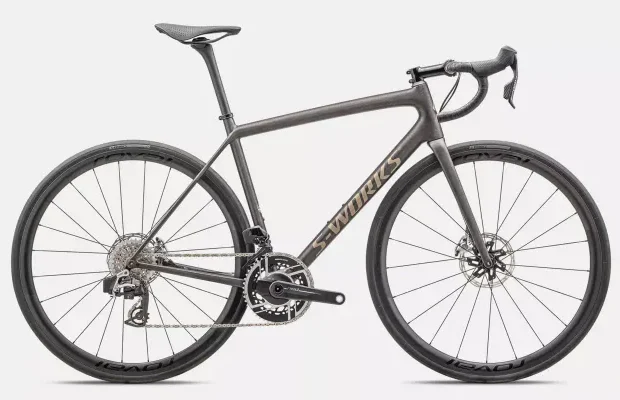
Next is the Specialized Aethos, There isn’t really a lot to say here, other than in terms of geometry this looks like a race bike. If they really wanted to make this a bike for everybody, I’d want to see at least 5mm less reach and 10mm more stack per size. Specialized would have had an absolute winner if they had just slotted this geometry exactly in the middle of the Roubaix and Tarmac – this would have been a near-perfect bike both from a fit perspective and from a comprehensive appeal standpoint, effectively completing their product lineup by bridging the gap between the super conservative Roubaix and the super aggressive Tarmac.
Canyon Endurace

Canyon Endurace
Rounding up the bikes from major brands is the Canyon Endurace. There is a lot to like about this bike. Not only does it come in a bunch of sizes – eight to be exact, where most other models in this comparison have six or seven – but they also have a great “real person” geometry that I think is probably best in the comparison. A couple things to note with the German brand is they label their bikes on the large side so consider sizing down (or going through an in depth sizing analysis with our sizing tool to confirm), and there is a very large jump between their sizes Large and XL – this is consistent as well with many bikes in their lineup and can lead to a bit of a dead spot when trying to fit some riders who fall between sizes L and XL.
FiftyOne Sika
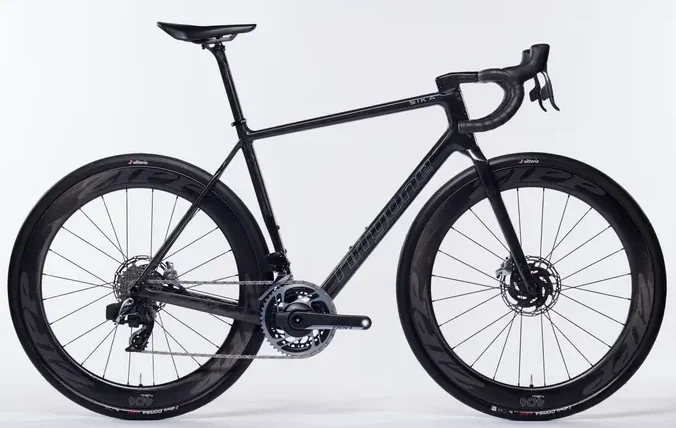
FiftyOne Sika
From the niche brands we’ll start with the FiftyOne Sika. I was really excited about this bike as it has a lot of great design choices and frankly it just looks awesome. I think they’ve done a pretty good job here with their fit geometry, however they have a bit of the opposite issue as the BMC Roadmachine – the bikes get more aggressive as they get larger. Ultimately I’d like to see the size L, XL, and XXL with a little more stack and a little less reach. Which would essentially line it up with the Fray…
Enve Fray

Enve Fray
Lastly we have the ENVE Fray which trends as the second most conservative bike on this comparison. This bike has a great conservative geometry that will work for many riders, however the options are a little compressed without a great match for both smaller and larger riders. With seven sizes available, it seems ENVE has prioritized smaller jumps between sizes rather than more rider coverage. It’s hard to criticize this approach as it will make it easier for a rider who fits these bikes to find the ideal fit, but does mean that both taller and shorter riders might not find an option that works for them.
As we can see from the analysis above, there is quite the spectrum of what the industry thinks a real person wants from a bike in terms of geometry. With this in mind, next we will compare who the industry uses as their design models and how that differs from a “real person” and then parse out their needs and what the industry can do to improve their offerings.
Who are bikes designed by and for?
Unfortunately, too many bikes are still designed around significant input from pro riders (and almost universally male), and the designers themselves are typically males with a lifetime in the cycling industry, which in itself is driven by the performance side of the sport. While having passion and history in the sport is fantastic, this tends to lead to an echo chamber effect which leads to outcomes such as the Aethos – a bike designed for a more “average” rider but that is more aggressive than most race bikes.
Who is the average rider?
On one hand we have bikes designed or heavily influenced by pros, but on the other we have the following data on the people buying these bikes:
Average age: 40
Average Height: 177cm
Average Weight: 75kg
Gender: 51% Male / 49% Female
Average Years of Riding: 5
What this equates to is bikes that are designed for people 15 years younger, and who are stronger, lighter, and faster than the people buying them while only representing 50% of the buyers in terms of gender.
I can’t speak to the gender difference in design outcomes but I do know those 15 years and roughly 10kgs make a huge difference in how a bike feels and fits.
What changes should be made?
From our perspective we think for bikes to be designed for “real people” they need to make the following changes:
Cater to more sizes
Brands do an excellent job of designing great bikes for people between roughly 5’6 and 6’2. Once you get out of that range it gets increasingly hard to find a bike that fits. This is especially true on the small side because of component design.
While many brands will state they have women’s models, we think this needs to be more of a wholesale shift to making models that cover a broad spectrum of body types as there can be just as much variation in body size within a gender as across them.
Proportionate componentry
Brands need to spec bikes with appropriate fit componentry (handlebar, stem, saddle, and crank) or make those parts easily available.
Brands have known for a decade that they are shipping bikes with cranks that are too long. The industry needs a wholesale shift to cranks that are at least 5mm shorter.
Similar changes can be made to both handlebar width and stem length. Bars are consistently too wide and stems still trend a little long. Shifting the entire spectrum to one size narrow handlebars and one size shorter stem would likely improve the outcomes.
Ride quality
Ride quality needs to be great but active or passive suspension is outdated.
As we move to road bikes with clearance for tires up to 40mm the need for suspension parts that bikes such as the Trek Domane or Specialized Roubaix offer are getting obsolete. An extra 5mm of rubber is drastically more compliant and easy to implement than designing and constructing complicated suspension pieces.
Less aggressive geometries.
The fact that brands still think a bike more aggressive than an R5 (a Tour de France winning race bike) is a bike built for “real people” is baffling and speaks to the wholesale misunderstanding of your average rider that still happens in bike design.
We think the Endurace knocks it out of the park in this aspect. If only it was easy to order one with the right stem length…
Key Takeaways
In summary, while the bike industry has made strides in designing bikes with ‘real person’ geometry, there is still room for improvement and we are excited to see what the future brings. By considering the needs of a broader range of riders, including those outside the typical size range and with different body types, and by making thoughtful adjustments to fit componentry and geometry, the industry can better serve the average rider. Our analysis highlights the need for less aggressive geometries and more inclusive design approaches to ensure that every rider can find their perfect fit.
Additional Resources
- Brand Comparison: Top 5 Endurance Road Bikes
- Bike Sizing Vs. Bike Fitting
- Bicycle Geometry 101: Handling Geometry