





This year marked our second time attending the Science & Cycling conference. This time in Lille, France. For those who don’t know, this conference takes place annually in the host city of the Tour De France. It’s a fantastic opportunity to take in some of the leading research in the field and network with the top academics, thought leaders, and hands-on players in the cycling industry.
A few presentations really stood out to both me and many other attendees, and I’d like to take a short moment to highlight them. Please note, many of these presentations were either the initial presentation of academic research papers or were quite research based so a brief paragraph or two obviously won’t do them justice.
Conference Highlights
Our team attended several compelling presentations that stood out for their practical relevance and innovative research. Below are the key highlights:
The Science Behind Crank Length: Why you are free to choose.
Presenter: Jim Martin – https://profiles.faculty.utah.edu/u0238089
This presentation delved deeply into the biomechanics and physiological implications of crank length on cycling performance and efficiency. If you follow us on any of socials (instagram, youtube) you know we are passionate about crank length. Well Jim could be described as the godfather of crank length.
In this presentation Jim did a deep dive into his research behind crank length and both sprint power and endurance power. The key takeaway here is that from a power production perspective crank length basically doesn’t matter. Our takeaway, and we’ve used this for years, is pick the crank length that fits you best, and frankly for the vast majority of people that means shorter than you likely have.
We plan on doing a collab with Jim in the near future to help share some of his ideas.
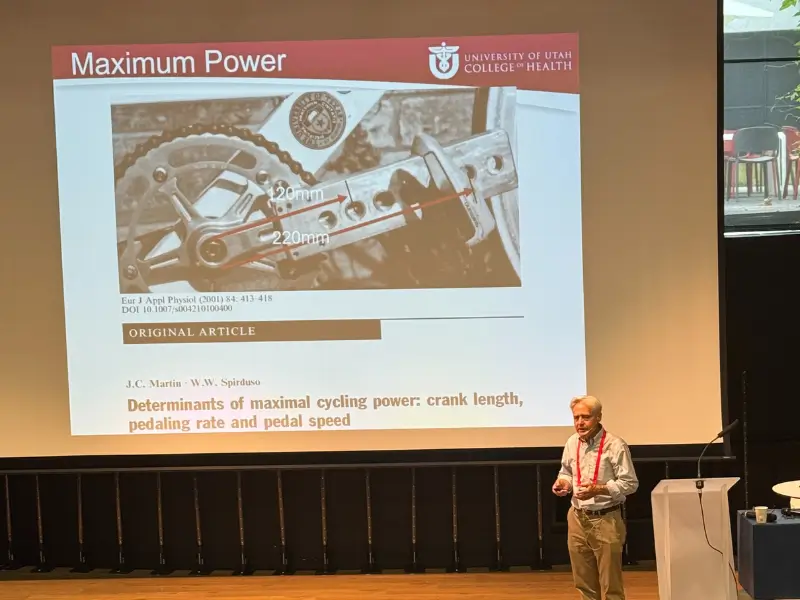
Jim gave a comprehensive dive into the science of crank arm lengths.
Saddle Soreness and other genitoperineal complaints in cyclists: Prevention and treatment are key to improving performance.
Presenter: Hedwig Neels – https://www.hedwigneels.com/en
This presentation was eye opening to say the least. Hedwig opened her presentation with a warning: “I use terms like penis, labia, and anus, like other presenters here use ankle, knee or elbow, so if you get uncomfortable you are welcome to leave.” I originally felt like this was a bit of an overstated warning but boy did Hedwig dive right into saddle related issues. Detailed photographs, descriptions and diagrams aided the presentation.
Hedwig’s presentation gave valuable insights into the nuances of the causes of saddle soreness and the often overlooked relationship between pelvic floor dysfunction and saddle issues. Like Jim Martin earlier in the day we plan on speaking further with Hedwig and helping share her valuable insights.
Bike Fit 2.0: Lesson’s Learned and what the future holds.
Presenter: Phil Burt – www.philburtinnovation.co.uk
We might be a bit biased on this one since part of Phil Burt’s “Bike Fit 2.0” was introducing his new remote bike fitting service which focuses heavily on leveraging MyVeloFit to enable remote reviews of existing bike fits. However on top of this Phil also introduced a number of new and exciting ideas such as custom chamois, custom parts, and a more individualized and democratized notion of the future of bike fighting.
Stay tuned for future MVF x PB announcements.
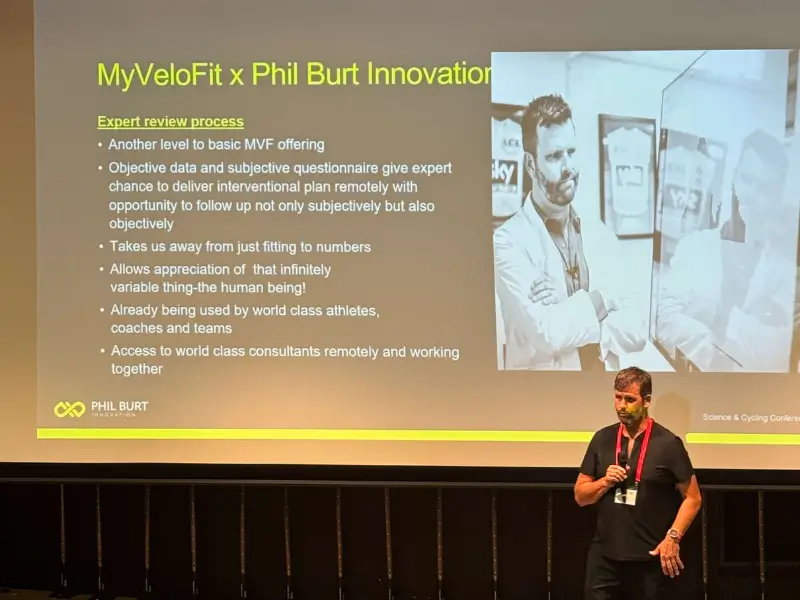
Phil Burt discussed his partnership with MyVeloFit’s expert review process.
How Gear Ratio Limits will Make Cycling Less Safe
Presenter: Dan Bigham
Dan Bigham’s insightful presentation discussed the potential safety implications of new gear ratio limitations in cycling. He presented data and arguments suggesting that such limitations could inadvertently lead to less safe riding conditions for athletes or at the very best no change at all. The main takeaway from Dan’s presentation was that we need to use science and data backed decision making in order to actually make cycling safer and gear ratio limits don’t have any data based indication of improved safety.
Dan discussed the importance of science backed decision making in the efforts to make cycling safer.
Conclusion
Next year’s conference will be at the Grand Depart in Barcelona followed by what promises to be some exciting stages. We are looking forward to heading back next year and sharing even more exciting news.