



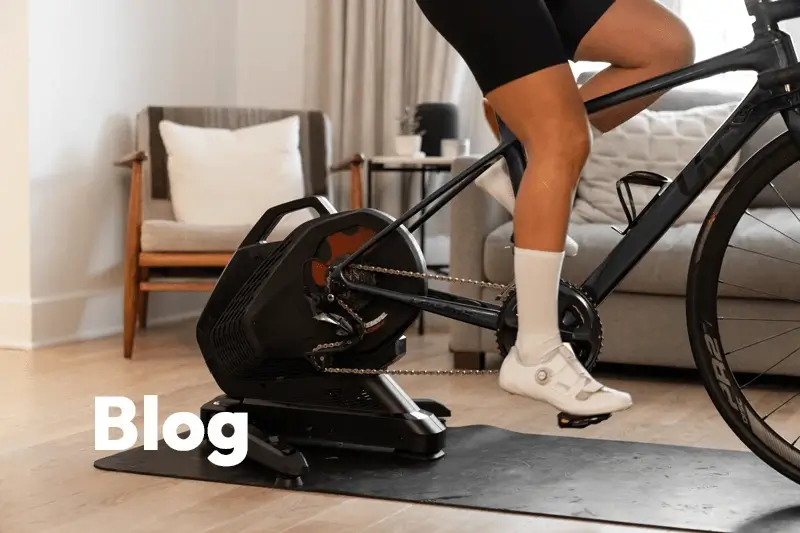





Choosing a new saddle can be challenging, confusing and expensive. With so many variables affecting saddle fit and comfort—and plenty of conflicting advice—finding the best option for you can feel overwhelming.
In this guide, we’ll break down the key factors to consider when choosing a new saddle, covering:
The causes of saddle discomfort
- How bike fit influences saddle choice
- Saddle shape and its impact on comfort
- A step-by-step process to find your perfect saddle
A Quick Note on Gender-Specific Saddles
This post wont focus on the differences between men’s and women’s saddles. While there are anatomical variations, the fundamentals of saddle comfort apply to all riders. Regardless of gender, an ill-fitting saddle or improper bike setup will lead to discomfort.
What Causes Bicycle Saddle Discomfort:
There are two main components of saddle discomfort: pressure and friction.
Understanding Saddle Pressure
At first glance saddle pressure seems pretty obvious – you sit on the saddle, so there is pressure on it. But the amount and distribution of pressure determine whether you feel comfortable or in pain.
Let’s have a quick nerd break and look at the formula for pressure: P = F/A Pressure equals force divided by area. So, to decrease pressure we either need to reduce force or increase area; simple, right? Not quite…
While the formula for pressure is simple physics, finding comfort on the saddle isn’t as easy as just minimizing pressure. Instead the goal is to direct contact into the correct areas. Maximizing the pressure in areas that can accommodate it – mainly the structural components of the ischium while minimizing pressure in the soft tissues areas such as the perineum and parts of the genitals.
Each person’s capacity for pressure in various areas is different. Some can handle a significant amount of soft tissue pressure while others can only handle a small amount of structural pressure. Your individual pressure capacity is based on a number of factors, but it’s a good rule of thumb to start by ensuring most of the pressure is on the structural components of your pelvis and then going from there.
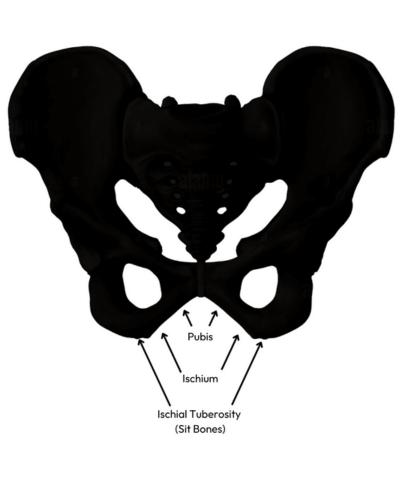
Important parts of the pelvis that impact saddle comfort.
How Friction Affects Saddle Comfort
While pressure is the main consideration of saddle comfort, friction is also an important factor. Friction is caused by movement between the contact points of the saddle. Friction can either be limited to the pelvic structure that is resting on the saddle, or can include the inner thigh and glutes where they contact the outer edge of the saddle.
Some amount of friction is inherent due to the nature of pedaling a bike. The pelvic structure moves as we extend the leg through the pedal stroke, thereby creating movement between the contact points and the saddle. Friction can be either from lateral movement across the saddle or vertical movement up and down the saddle.
Friction can work in tandem with pressure to cause things like saddle sores. You can have a little bit of friction and a lot of pressure or a lot of friction and a little pressure and in each case it could lead to saddle sores or other injuries.

As you pedal, the pelvis shifts slightly causing friction.
Both the amounts of pressure and friction can be changed by either changing your fit or changing your saddle: We will discuss below.
Bike Fit and Saddle Choice: Why Your Position Matters
When riders experience discomfort, the first instinct is often to buy a new saddle. However, poor bike fit is a major cause of saddle issues.
Common Fit Issues That Cause Saddle Pain
- Saddle Too High
- Leads to excessive pressure on the saddle
- Reduces stability, causing rocking and friction
2. Handlebars Too Low
- Rolls the pelvis forward, increasing pressure on soft tissues
- Can cause numbness and discomfort
Even if your fit is generally correct, your pelvic angle (sacral angle) can influence how the saddle interacts with your body. A more aggressive riding position shifts pressure forward, requiring a different saddle shape.
💡 Key takeaway: Adjust your bike fit first before replacing your saddle. If your position is correct but discomfort persists, it’s time to consider a different saddle.
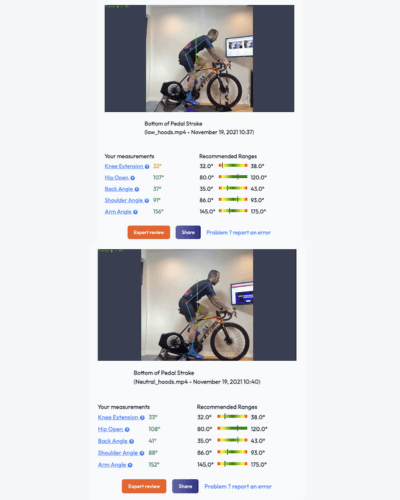
Make sure your position isn’t the cause of saddle discomfort.
Saddle Shape:
In this section we’ll look at the components of a saddle’s “shape.” Saddles come in all different shapes and it’s important to be aware of the different aspects that make up the overall shape of the saddle. These aspects are:
- Width
- Length
- Curvature
- Cutout size and location
Width generally refers to the width of the saddle at the widest point. Typically, saddles that are offered in different widths are usually the same width at the front, and only vary as you transition to the rear of the saddle. Most saddle manufacturers tend to make each model/shape in at least two widths and sometimes up to four depending on the brand. Width works in conjunction with the overall shape to determine how the saddle fits you. Both aspects must be correct – You can have the correct shape and wrong width, or you can have the correct width and wrong shape saddle.

Width and length of the saddle can both influence comfort.
Length refers to the overall length of the saddle. Recently there has been an increase in the prevalence of “short nose” saddles. The primary benefit of these shorter saddles is less pressure on the front of the saddle when the rider is in a more aggressive riding position, so going with a shorter saddle may help if you are experiencing pressure or chafing on the front of the saddle. However, the hidden cost can be more chafing at the wider point of the saddle where your inner thighs rub the saddle because.
The curvature of the saddle refers to the overall flatness of the saddle. Curvature can be different in three dimensions of the saddle – how flat it is from the side, top, and front. Here are some examples:

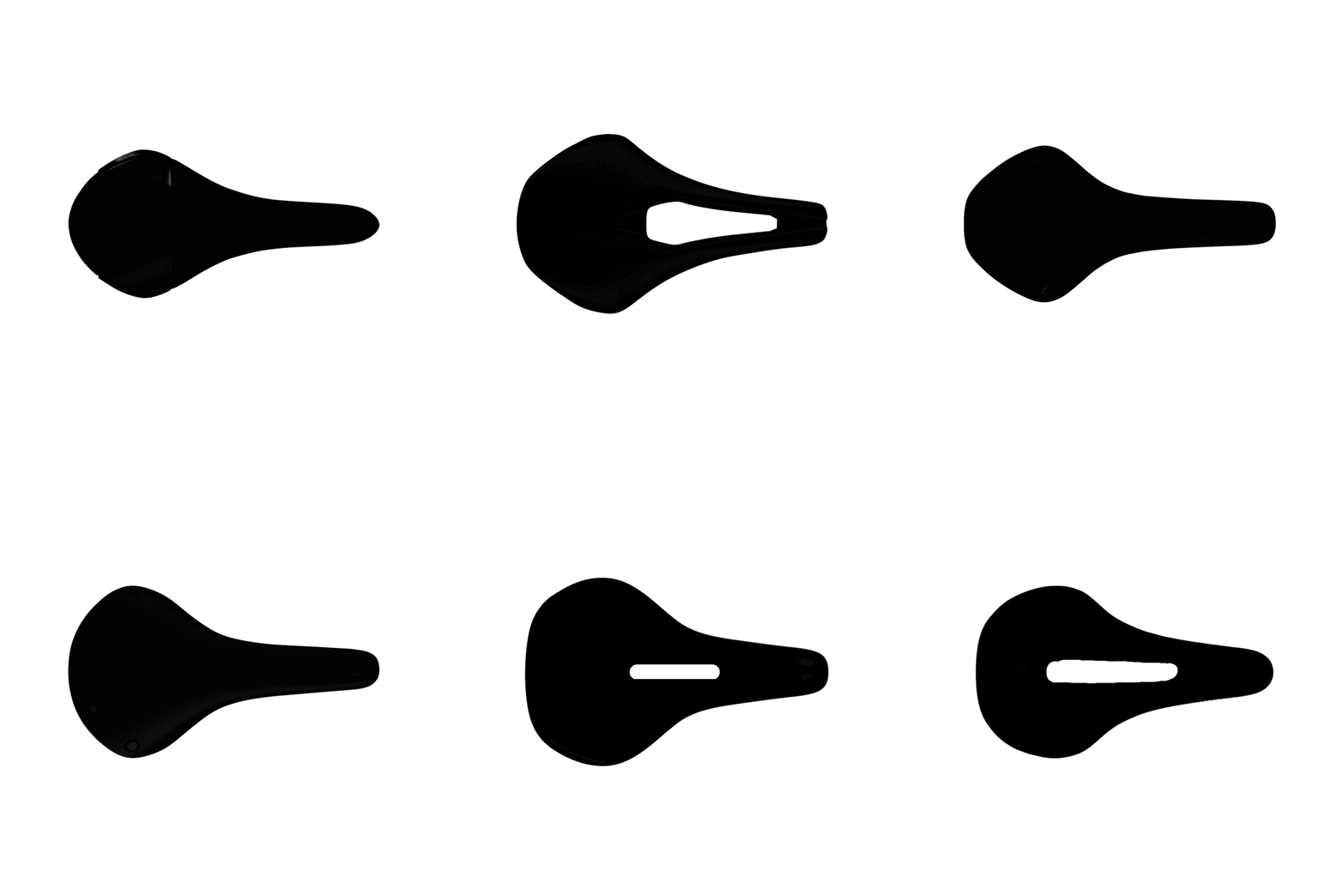
Saddle curvature is unique in different saddle styles.
In general you can group curvature into the flatness of the saddle in terms of how round the frontal plane is and if there is a “swoop” over the length of the saddle looking from the side. From the frontal plane rounder saddles potentially distribute pressure more across a broader area of the ischium whereas flatter saddles direct the pressure more to a smaller area. A saddle with a “swoop” can help stabilize you and may give you a few more variations in contact area as you move around on the saddle.
Cutout refers to if there is any area removed from the central portion of the saddle to remove pressure in the perineal area. Cutouts can vary in terms of shape and size. Recalling our formula from above: P = F/A. Reducing the area by cutting out a portion of the saddle will then naturally increase pressure on other areas of the saddle. Because of this the shape of cutouts available has changed drastically over the years and some brands are moving towards eliminating the cutout and incorporating a less dense center or front portion of the saddle to alleviate some of the pressure while not fully reducing the total area of the saddle.
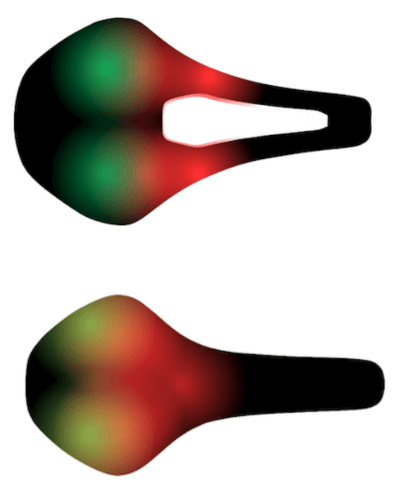
Saddle cutouts impact how saddle pressure is dispersed.
Padding
Not related to shape but also important in how comfortable a saddle may be is padding. Many brands offer saddles in various levels of padding. Adding more padding helps alleviate pressure as it disperses the area of contact but be careful with adding too much padding as it increases the chance of friction. It’s a good rule of thumb to choose a more minimally padded saddle and use bike shorts with the adequate padding.
As we can see from the above, there are many variables when it comes to picking a new bicycle saddle. This complexity is one of the reasons brands try to narrow the selection process into a single variable (such as width) instead of all components that determine how a saddle fits you.
How To Determine the Right Saddle for You:
Given all the factors needed when changing your saddle, the next step is figuring out what saddle is right for you. The process we recommend is as follows:
- Check your fit
- Determine what doesn’t work with the existing saddle
- Select a new saddle to try
- Check your fit
- Test saddle
- Repeat
Check Your Fit
The very first thing you should do when you are having saddle issues is make sure your fit is dialed in. There are various ways to do that which can range from an in person professional fit to an AI Powered MyVeloFit analysis. We’ll talk you through using MyVeloFit to determine if your fit is correct before you start looking for new saddles.
To check if your fit is correct you’ll begin by verifying that your key fit measurements are within range. Using MyVeloFit, the metrics we are most concerned with are Knee Extension, Back Angle, and Shoulder Angle. We recommend that each of these angles be on the conservative side for your mobility if you are having trouble with saddle pain. This equates to a higher number for knee and back angle, and a lower number for shoulder angle – all while staying within the recommended ranges.
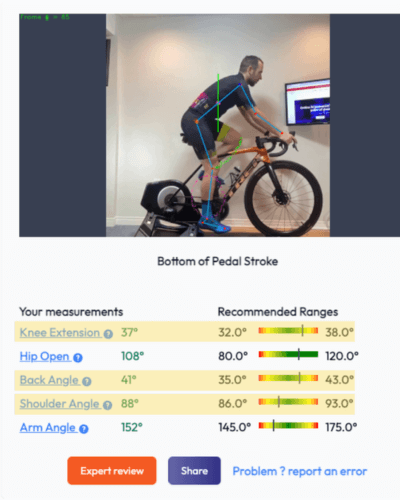
Check your fit throughout the saddle process.
Identify Specific Issues
If your saddle is still uncomfortable after dialing in your fit, the next step is to narrow in more specifically on what issues you’re experiencing, including:
- Excessive movement while pedaling
- High pressure points
- Numbness or tingling
- Targeted pain
Is there something about the shape that could be causing this?
There are three common shape issues:
- The saddle is too narrow
- The saddle is too round
- The saddle’s cut out is incompatible with the rider’s physiology.
If you take a moment to think about it, along with the knowledge from this article you should be able to identify what aspects of the saddle aren’t working for you. When in doubt apply logic and move away from your current saddle shape. For example, If you have a narrow round saddle try something a bit wider and flatter. If you have a flat saddle with a cutout, try something with a pressure relief channel and some roundness.
Re-Check Your Fit
Next step after swapping out the saddle, check your fit again. This applies even if you’ve set the bike up to the existing measurements, when you change your saddle you change your fit. Every time you change your saddle you need to take the time to check and properly dial in the fit again.
Ride
Once you’ve dialed in your position you’ll want to give the new saddle a few rides to see how it works with you. Don’t be afraid if it is slightly uncomfortable on the first few rides, sometimes it takes a few rides to adapt to the new/different contact points that the saddle may have.
Evaluate
After following these steps, if the new saddle didn’t work, it’s time to repeat the above steps from step 2. Make sure to identify what didn’t work about this saddle as well. Sometimes you need to narrow down the key 2-3 aspects of a saddle that do and don’t work in order to find the ideal saddle.
As this process can require trying (and buying) multiple saddles it’s worth considering brands that offer a solid satisfaction guarantee. Many brands have a good selection of shapes and sizes so it’s usually possible to find something that works for you within a single brand. Some of the brands we recommend are Bontrager/Trek, Specialized, and Pro/Shimano as they all have at least a 30 day guarantee so you can take your time to assess if the saddle works well for you. and not get stuck with a parts bin full of barely used saddles.
Key Takeaways for Choosing a Bike Saddle
✅ Saddle discomfort comes from pressure and friction—minimizing both is key.
✅ Bike fit plays a crucial role—optimize your position first.
✅ Saddle shape matters—choose the right width, length, and curvature.
✅ Padding isn’t always better—firmer saddles + quality shorts = best comfort.
✅ Test, adjust, and repeat until you find the right saddle.
Finding the perfect saddle may take some trial and error, but with the right approach, you’ll enjoy more comfortable, pain-free rides. 🚴♂️