
A More Comfortable Ride: Address Cycling Pain With MyVeloFit

Harness AI Markerless Motion Capture To Prevent Discomfort and Empower You to Ride Pain-Free.

Begin Your Pain-Free Riding Journey
150k

Active Users

450k

Fits Processesd

100+

Countries

3.5bn

Data Points

Transform Your Ride With MyVeloFit’s AI Technology


Cycling should feel good—whether you’re commuting a few miles or conquering long-distance events. If you’ve been struggling with aches, discomfort, or nagging pain, your bike fit may be the culprit.

Our advanced AI markerless motion capture dynamically analyzes your unique biomechanics as you ride. By pinpointing the movement of your key joints and posture we deliver data-driven insights that enhance comfort, boost efficiency, and reduce strain. Unlike traditional static bike fits, our technology continuously evaluates your body’s movement throughout the ride, making it easier to identify potential pain points, including strain on your back, knees, hips, and wrists.

The result? A customized bike fit that not only reduces pain but also improves your overall cycling performance by ensuring you’re riding in a position that harmonizes with your natural body mechanics. Whether you’re seeking relief from persistent discomfort or aiming to elevate your performance, MyVeloFit helps you ride comfortably, efficiently, and pain-free.

Get Started →
100K

Active Users

250K

Fits Processed

100+

Countries

3.5bn

Data Points

Eliminate Back Pain With Precision Fit Adjustments


Back pain is one of the most common and frustrating cycling issues, often triggered by poor posture, muscle tightness, or an inadequate bike setup. Key contributors include overextended handlebar reach, a saddle position that forces your hips out of alignment, or simply trying to hold a position your core can’t support.

Unaddressed, these factors can lead to lower back strain, tightness across the lumbar region, and reduced performance and enjoyment.


Common Causes of
Cycling-Related Back Pain

Overreaching to
the Handlebars
If your handlebar is set too far forward or too low, you may extend your spine unnaturally, placing undue stress on the lower back. This often manifests as hip rocking or a constant struggle to maintain stability in your core.
Excessive
Saddle Height
A seat that’s too high forces you to stretch for each pedal stroke, straining the lower back and potentially causing side-to-side hip motion. While this is one of the most common causes of back pain, it’s often overlooked.
Improper
Saddle Fore-aft
A saddle that’s too far forward or too far backward, can result in either excessive extension of your spine, or compression, leading to discomfort. Finding the right fore-aft position can often be the key to unlocking a better ride.
Weak Core and
Tight Hamstrings
Even if your bike fit may appear to be next to perfect, a lack of core strength or overly tight hamstrings can make it difficult to maintain proper posture. Your back muscles end up carrying excess load, causing fatigue and pain during longer rides.
Overly Aggressive
Posture
Chasing an extreme aero position without the flexibility to support it can lead to constant strain across your spine and hips. Going beyond your current capabilities often leads to nagging aches as your body fights to hold a stance it isn’t ready for.


How We Help

Relieve Knee Pain


Knee pain ranks among the most frequent and frustrating issues cyclists face, stemming from a variety of sources—like improper saddle height, incorrect fore-aft, or suboptimal foot alignment.

Sometimes the pain is localized at the front of the knee (often due to a saddle that’s too low or too far forward), whereas pain at the back could point to overextension caused by excessive saddle height. Meanwhile, misaligned cleats or excessive crank length might force your knees to track unnaturally, leading to stress and inflammation over time.

RIDERS EVERYWHERE

A.I. Position Analysis


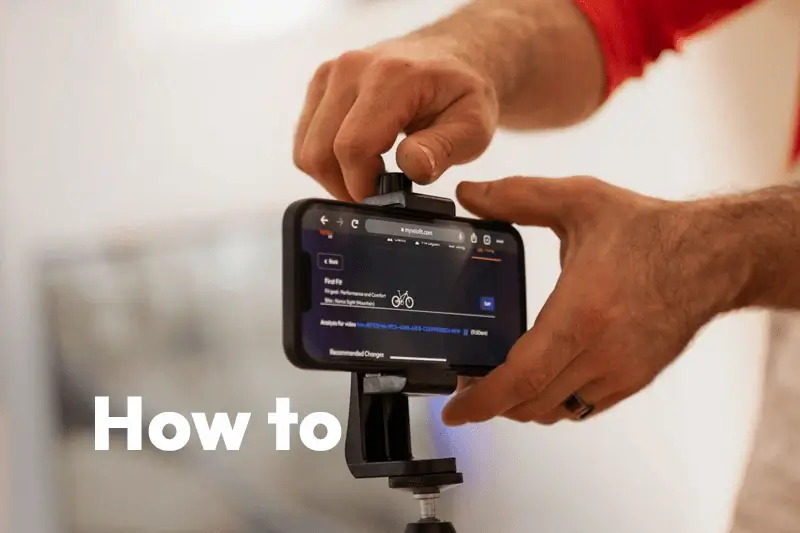
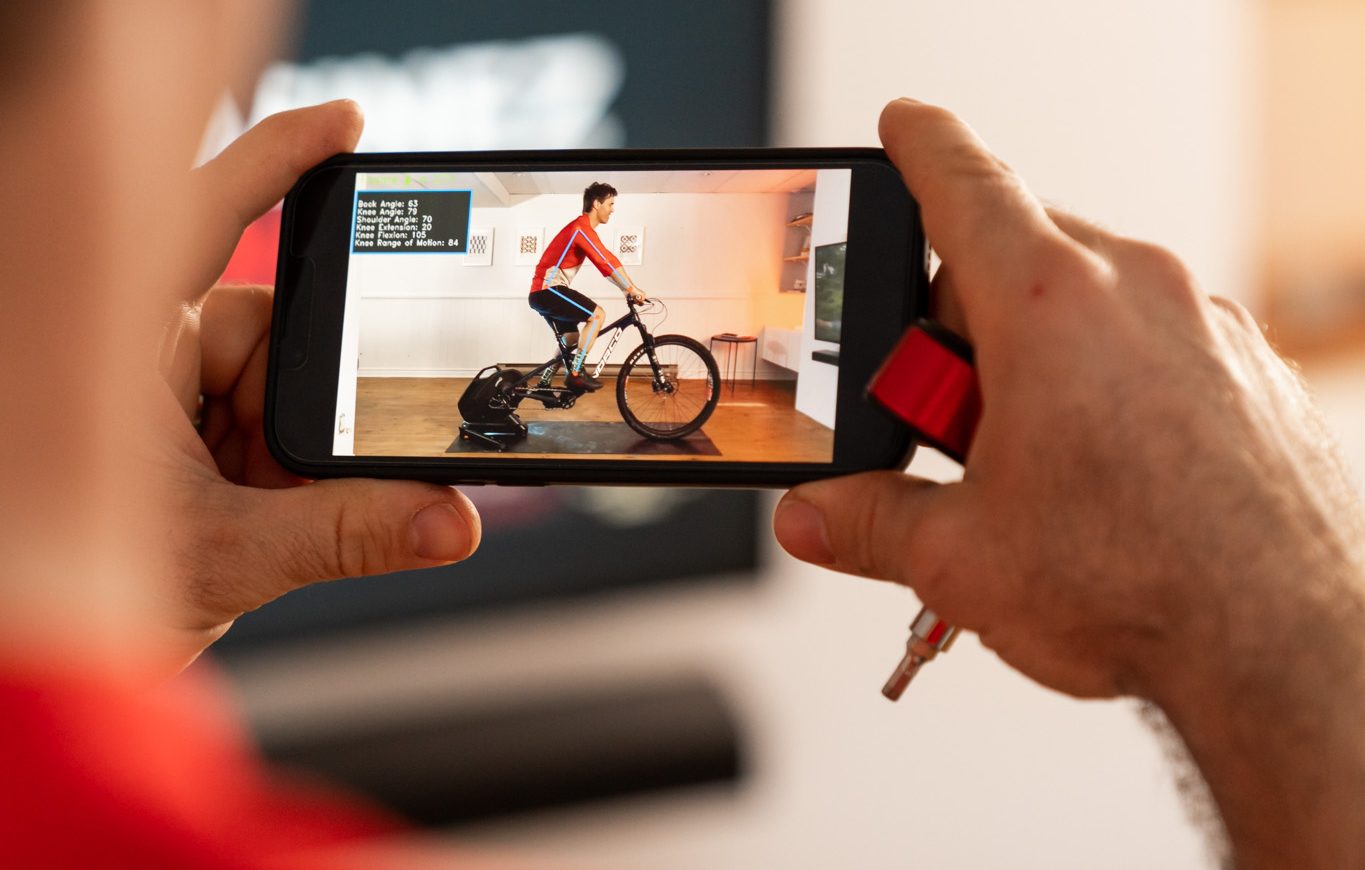
Our on bike assessment has been made as easy as possible. All it takes is a 15 second video of you riding in place. Once uploaded our software takes over and completes a full analysis of your position.

Get Started →


Common Causes of
Cycling-Related Knee Pain

Seat Height Mismatch
A saddle that’s too low can cause excessive pressure on the front of your knees, while one that’s too high risks overextension. Both scenarios can exacerbate joint stress and lead to persistent discomfort.
Incorrect Fore-Aft Position
Shifting the saddle too far forward or backward changes knee alignment relative to the pedal axle, sometimes resulting in muscle imbalances or increased knee torque.
Cleat Misalignment & Foot Support
Cleats set too inward or outward, or lacking proper float, force your knees into awkward angles. In addition, insufficient arch support can alter the way your knees track during each revolution.
Crank Length & Cadence
Longer cranks can overemphasize knee flexion, placing excess strain on your knees, particularly if your typical cadence is low. This mismatch often underlies knee pains you can’t quite pin down through seat height alone.


How We Help

Say Goodbye to Saddle Pain


Saddle soreness and numbness often rank at the top of cyclists’ complaints, emerging from issues like excessive pressure on soft tissue, a saddle that doesn’t match your sit bones, or a tilt that shifts too much weight onto sensitive regions.

Long rides only magnify these problems, causing numbness, chafing, or even lingering pain that can undermine your performance and enjoyment. Getting the right setup goes beyond a single adjustment; it requires evaluating how your pelvis interacts with the saddle throughout your pedal stroke.


Why Saddle Pain Happens

Incorrect
Saddle Tilt
A saddle that tilts too far forward can force constant shifting, causing chafing and stressing your arms as they bear more weight. Conversely, a backward tilt might put extra pressure on soft tissue areas, leading to numbness.
Height & Fore-Aft
Misalignment
A saddle that’s too high or too far back can shift weight distribution onto your perineum or inner thighs. This often results in hot spots, rubbing, or general discomfort that worsens over longer distances.
Saddle Shape
& Width
A saddle that’s too narrow might not support your sit bones, while one that’s too wide could rub against your thighs. Different cutouts, padding, or nose shapes can also drastically change pressure patterns.
Poor Core Engagement
& Pelvic Support
Weak core muscles or limited pelvic flexibility can make it harder to maintain stable positioning, causing you to slide around on the saddle and aggravate friction or pressure points.
Ignoring Iterative
Adjustments
Seat pain might improve with minor tilt or height tweaks, but many riders never revisit these settings once they’re done. An iterative approach helps you find the sweet spot, verifying each small change’s impact on your comfort.


How We Help

RIDERS EVERYWHERE

Trusted by Thousands of Cyclists Worldwide


Review Stars

Awesome software!

Was suffering from saddle numbness and pain. No more issues after getting a bike fit through MyVeloFit. Will use it again once I get my triathlon bike

~ Lav L.

Review Stars

This is a great option

This is a great option to help dial in a bike fit from home. I’ve made upgrades to both of my bikes based on recommendations I’ve gotten through MyVeloFit.

~ Dan S.

Review Stars

Excellent & Professional

Excellent and professional fitting experience with all the convenience of being at home

~ Shannon F.

Review Stars

Easy to get set up and great support

Really helped improve my performance. Easy to get set up and great support from team.

~ Nick P.

Review Stars

So much more convenient

I am very satisfied with the results, and it was so much more convenient to ride at home and upload videos than having to go to a bike shop for a professional fit.

~ Kate M.

Review Stars

I knew I had to go all in

I was skeptical about an AI-driven bike fit, but after using MyVeloFit has me lower, longer, & more comfortable than I’ve ever been before.

~ Cameron S.

Review Stars

Get the most out of your rides.

As an online retailer of bikes, ensuring our customers get the right bike size and fit can be a challenge. That’s why we partnered with MyVeloFit. Supported by MyVeloFit, our customers benefit from an independent sizing assessment—and a unique fit score across a range of bikes—to get the most out of their rides.

~ Nomad Frontiers (retailers)

Review Stars

Incredible!

Your tracking analysis software is incredible by the way, we’re trying to use dartfish and it jumps around all the time.

~ Nick Harris (Coach)

Review Stars

Astonishing!

What you have developed is astonishing!

~ Pete Pastides. (Browlee Fitness)

Review Stars

Works really, really well

Their [MyVeloFit] stuff is really, really, good and works really, really well”

~ Tim Cusik (BaseCamp)

Review Stars

An Excellent Product!

I have been using myvelofit for just over one year in a large bicycle retail shop and I do about six to eight fittings per week. It is an excellent product that in the hands of an experienced fitter generates very in depth information about riding position and ranges of motion, comparable to other fit systems such as Retul.

~ Marco Penna (Bike Fitter)


Review Stars

~ Ryan Drapper (Bike Fitter)

More Reviews →

FAQs

1How does MyVeloFit’s online bike fit work?
Our online bike fit process is designed to mirror the process used by professional fitters around the world. If you've had a bike fit before it should feel quite familiar, and if it's your first time rest assured it’s tried and tested. At it’s core our online bike fit includes 5 steps:
  • Complete a mobility assessment
  • Set goals for your bike fit (bike type and fit goals)
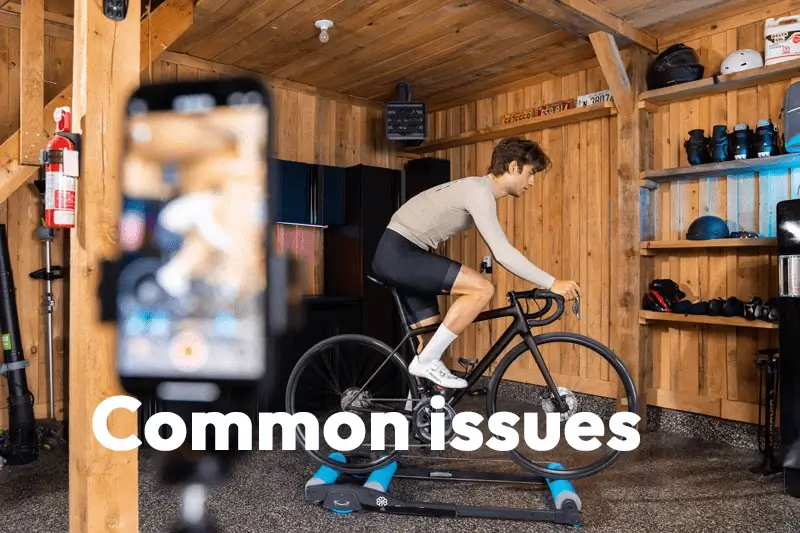
  • Record and upload a riding video (on your trainer)
  • Analyze results & make adjustments
  • Adapt to changes
Then repeat. Online bike fitting, like in person bike fitting, is iterative. So it’s completely normal to repeat steps 3 through 5 several times as you analyze, adjust, and adapt. The human body doesn’t always respond the way you might expect, which is why you need to keep reassessing the impacts of each adjustment you make. If you’d like to learn more about the process (and you should) we have a full blog post that goes into much more detail.
2How do I get set up for my online bike fit?
The short answer is that bike sizing is the process of choosing the right size of bike, and fitting is the process of adjusting the bike to suit your body and riding needs. To understand more about how these processes are separate but deeply related, check out our full blog post on the topic.
3Can I fit my bike from both sides?
You sure can! Uploading a video from either your left or right side is exactly the same process and can be completed in the same fit session. Be sure you place your camera consistently relative to your bike on both sides to ensure consistent results. Many riders have some asymmetry between left and right, so don’t be surprised if they aren’t exactly the same. At MyVeloFit we’re committed to help every rider improve their riding experience. To help remove any doubts, if we’re not able to help you improve your riding position within 30 days, we’ll give you your money back so you can seek out another approach.
4Can you transfer my fit from bike X to bike Y?
While we do not have a dedicated tool for transferring your fit between bikes, using MyVeloFit can be incredibly helpful to help you transfer your fit. What we recommend is starting a fit session for the reference bike to have a complete set of measurements of your body's position. Then use our easy guide to measuring your bike to document the bike’s measurements. Use those measurements to set up the bike you’d like to transfer the fit to, then finalize your fit by using MyVeloFit to confirm your body is in the same position as the reference bike.
5How do I change my fit goal?
As your fit goal is a key determinant of the recommendations we provide, it is not possible to change the fit goal in a session once it has been created. For Pro users, the easiest path forward is simply to create a new session with the fit goal you’d like. For Enthusiast users if you believe you may have made a mistake in setting up your session, simply reach out to our support team at support@myvelofit.com
6My bike can’t make the adjustment you’re recommending, is the software broken?
While bike fitting is about bringing together the rider and bike to work better together, it is perhaps more accurate to think about it as adapting the bike to work for the rider. The recommended adjustments provided in your fit report provide the changes to the bike required to move your body towards a better riding position for you. Unfortunately if your bike has run out of adjustments, this is a good indication the bike is not the right size/geometry for your needs.

How It Works:
Your Personalized Bike Fitting Process

Starting with this mobility-based foundation, MyVeloFit’s proprietary algorithms transform raw kinematic data into actionable insights. By incorporating the results of your assessment into the broader context of your posture, pedaling style, and equipment, we provide fit recommendations as unique as you are.

Step 1

Setup and
Initial Assessment
Begin your MyVeloFit journey by creating your profile and completing a quick functional mobility assessment. This step equips our algorithms with essential information about your body’s range of motion, ensuring that every subsequent recommendation is grounded in understanding your unique biomechanics.

Step 2

Record
and Upload
Mount your bike on a trainer and record a short video following our simple guidelines. With just a smartphone or tablet, you capture the video needed for our AI-driven kinematic analysis. No specialized tools, no complicated sensors—just basic video footage that reflects your riding position.

Step 3

AI-Powered
Analysis
Our advanced AI technology compares your video against a vast database of professional fits. It interprets posture, pedaling symmetry, joint angles, and more, using markerless motion capture to highlight opportunities for improvement. By analyzing how you move dynamically, the system identifies precise adjustments that elevate comfort, boost efficiency, and reduce strain.

Step 4

Receive Custom Fit Recommendations
Within minutes, a comprehensive fit report outlines each suggested change, from subtle saddle height shifts to optimizing handlebar reach. These recommendations are data-driven, discipline-specific, and completely personalized, embodying both the client’s feedback for advanced customization and the website’s focus on delivering expert-level insights.

Step 5

Fine-Tuning
and Support
Implement the recommended adjustments and experience the difference immediately. Should you have questions or wish to refine your setup further, our support team and the MyVeloFit platform are there to guide you. As your riding evolves—be it through improved fitness, new cycling goals, or upgraded components—you can revisit the process, allowing the AI to adapt and continually optimize your fit.

SUPPORT

Have a question? Get in touch


1
reCaptcha v3
keyboard_arrow_leftPrevious
Nextkeyboard_arrow_right
FormCraft - WordPress form builder

Ready for a Pain-Free Ride?