







Calculate Your Fit
Not All Bike Fit Calculators Are Created Equal - Online calculators can be a helpful starting point—but they often leave critical pieces out of the equation. Here’s what to know before trusting the numbers.
Not All Bike Fit Calculators Are Created Equal
Online calculators can be a helpful starting point—but they often leave critical pieces out of the equation. Here’s what to know before trusting the numbers.

Why Most Bike Fit Calculators Fall Short
As every calculator relies on different inputs and assumptions it’s impossible to evaluate their efficacy as a whole. However, there are a few key challenges that all bike fit calculators face that will always limit the quality of their results:
They Don’t Account for How You Move
Bike fit isn’t just about static measurements, it’s about how your body behaves under the load and movement of cycling. Your flexibility and mobility, strength, morphology, postural habits, pelvic tilt, pedal stroke patterns all influence ideal setup. Even two riders with an identical skeletal structure may have fairly different riding positions based on some or all of these other factors.
They Ignore Critical Variables
Calculators often don’t address key elements of your bike setup that can have a significant impact on your riding position. Changes in these components can have a significant impact the measurements that make up your fit: Saddle width, shape, padding, shell flex etc. Handlebar width, reach, shape Crank length Cleat position Shoe-pedal stack height
There’s No Feedback Loop
Bike fitting is by nature an iterative process which requires making adjustments based on the rider’s feedback and needs. Even if a bike fit calculator is able to get you close to a good position, they lack the ability to adapt that position any further. They produce a single output based on your body’s dimensions, but don’t provide you with any next steps.
They Provide a Single Position
It is widely accepted that every rider has a range of positions (or “bike fit window”) that can work for them, rather than a singular position. This is most obvious by considering that one rider will typically have a different position on different bikes (e.g. gravel, mtb, etc). Following from this there isn’t a single perfect position to ride any one of those bikes. Though it’s certainly possible a fit calculator could provide a range, most frequently bike fit calculators provide a singular “correct” position for the rider to target which doesn’t provide the flexibility necessary to find the most suitable position for that rider at that time.
Hidden Costs of a Poor Fit
So calculators aren’t perfect, but are they good enough?
Some riders may have awesome success with a bike fit calculator, but you won’t know until you try. One of the risks with experimenting blindly with your position is that cycling injuries are typically overuse injuries, which means they don’t always show up as pain right away, but can develop over time through the incredible repetition that is pedaling. Trusting a calculator that has no concept of how you’re moving on the bike might work out, or may cause issues that limit your ability to ride.
Some common issues that arrive from a poor riding position are:
A Better Way: Dynamic, Personalized Fit with Video Analysis
So if calculators aren’t the answer, what is? Dynamic fit analysis is the industry standard for evaluating a rider's fit. This technique uses motion capture technology to observe and measure a rider on their bike and then make decisions about their position based on how they move. This approach to bike fit has typically been reserved for professional bike fit studios, but products like MyVeloFit now allow any rider to complete a dynamic fit analysis right from home.
What MyVeloFit Does Differently:
- Uses AI to analyze your actual position on your bike with your components and equipment.
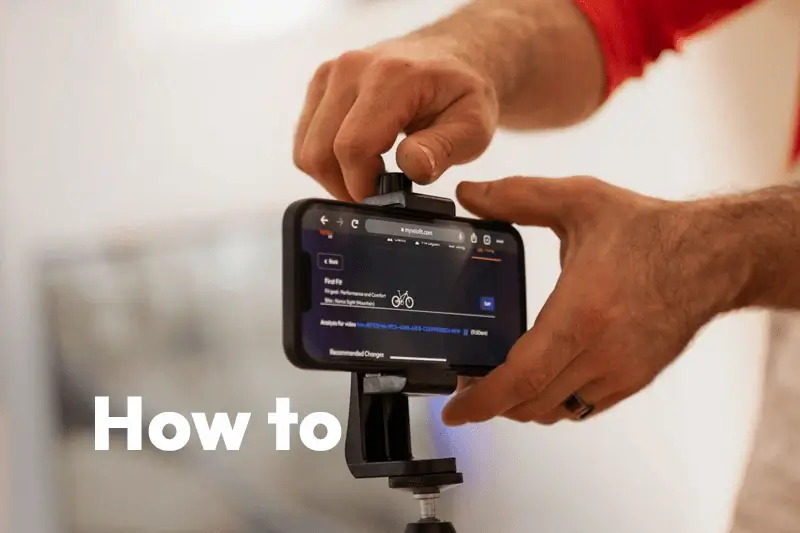
- Works off video footage from your smartphone.
- Accounts for your riding goals, mobility and biomechanics.
- Offers detailed, step-by-step setup suggestions: saddle height, setback, handlebar position, and more.
Whether you're on a road, gravel, MTB, or TT bike, the fit adapts to your goals and riding style.

When to Use a Calculator vs. a Bike Fit
| Situation | Calculator | MyVeloFit |
|---|---|---|
| Brand new to cycling | ✅ | ✅ |
| Buying a bike online | ⚠️ Approx only | ✅ |
| Prior injury or pain | ❌ | ✅ |
| Training for a big event | ❌ | ✅ |
| Want max comfort & efficiency | ❌ | ✅ |
Pro Insight: Many bike brands now list stack and reach alongside size. Even with this info, calculators can’t tell you how that geometry fits your personal mechanics—but MyVeloFit can.

Still Curious?
Try Our Fit Calculators First
We get it—you want to see where you stand.
Even a broken clock can be right twice a day, so we’ve created a few easy calculators for you to try based on some of the oldest saddle height calculations in the book. We’ve seen these work perfectly for some riders and be wildly off for others, so we make no promises:)
Lemond Method
How it works: First, measure your inseam by standing barefoot with your back against a wall, feet shoulder-width apart. Slide the spine of a hardcover book firmly up between your legs, mimicking a saddle. Mark the wall where the top of the book’s spine meets it, and measure from this mark to the floor to find your inseam length.
Your saddle height is then determined by your inseam multiplied by 0.883. In the LeMond method, your saddle height is defined as the distance between the centre of your bottom bracket spindle to the top of your saddle (following your seatpost)
Hamley and Thomas Method
How it works: Using the inseam measurement (same as above), multiply it by 1.09.
In this method, your saddle height is defined as the distance between the centre of your lower pedal axle (with your cranks inline with your seat tube) to the top of your saddle (following your seatpost), thereby taking in one additional variable and accounting for crank length.
The Ultimate Bike Fit Calculator
For a little bit of extra fun, we added a bunch of the factors that are important to figuring out the right saddle height, to create the ultimate calculator. We hope you enjoy, and maybe even learn something!
FAQs
How MyVeloFit Works:
Your Personalized Bike Fitting Process
Starting with this mobility-based foundation, MyVeloFit’s proprietary algorithms transform raw kinematic data into actionable insights. By incorporating the results of your assessment into the broader context of your posture, pedaling style, and equipment, we provide fit recommendations as unique as you are.